

The ‘Happy Diabetic Cat’ – simple patient selection for Senvelgo®
Senvelgo® is indicated for the reduction of hyperglycaemia in cats with non-insulin-dependent diabetes mellitus. There are no tests to identify whether a cat is insulin-dependent or non-insulin-dependent. However, 80-90% of diabetic cats are non-insulin-dependent13.
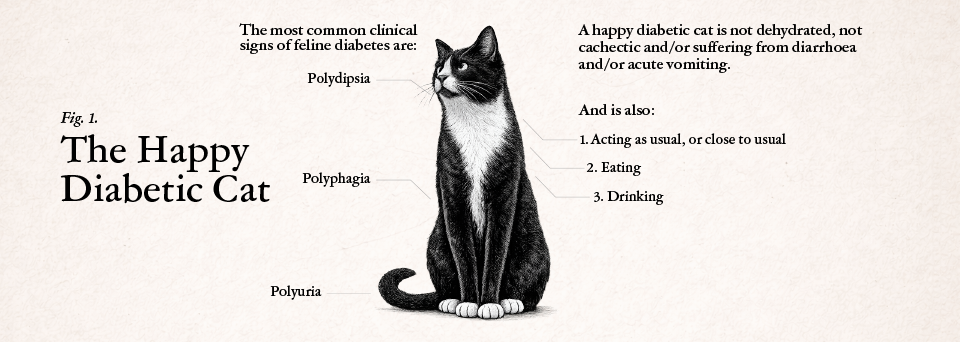
It is important to select appropriate patients for Senvelgo® treatment, but luckily patient selection is very simple. They are those relatively well, diabetic cats - we call them ‘Happy Diabetics’. Happy diabetics are eating (probably more than normal), drinking (again, probably more than normal) and interacting normally. They are not vomiting, lethargic or dehydrated and they do not have diarrhoea. They are not cachexic, so should not be very thin with significant muscle loss following extreme weight loss and they should not have ketones in their urine.

Diabetes management flowchart
This flowchart summarises recommended steps for assessing suitability, initiating treatment and monitoring cats receiving Senvelgo®, including ketone assessment and long-term glycaemic evaluation.
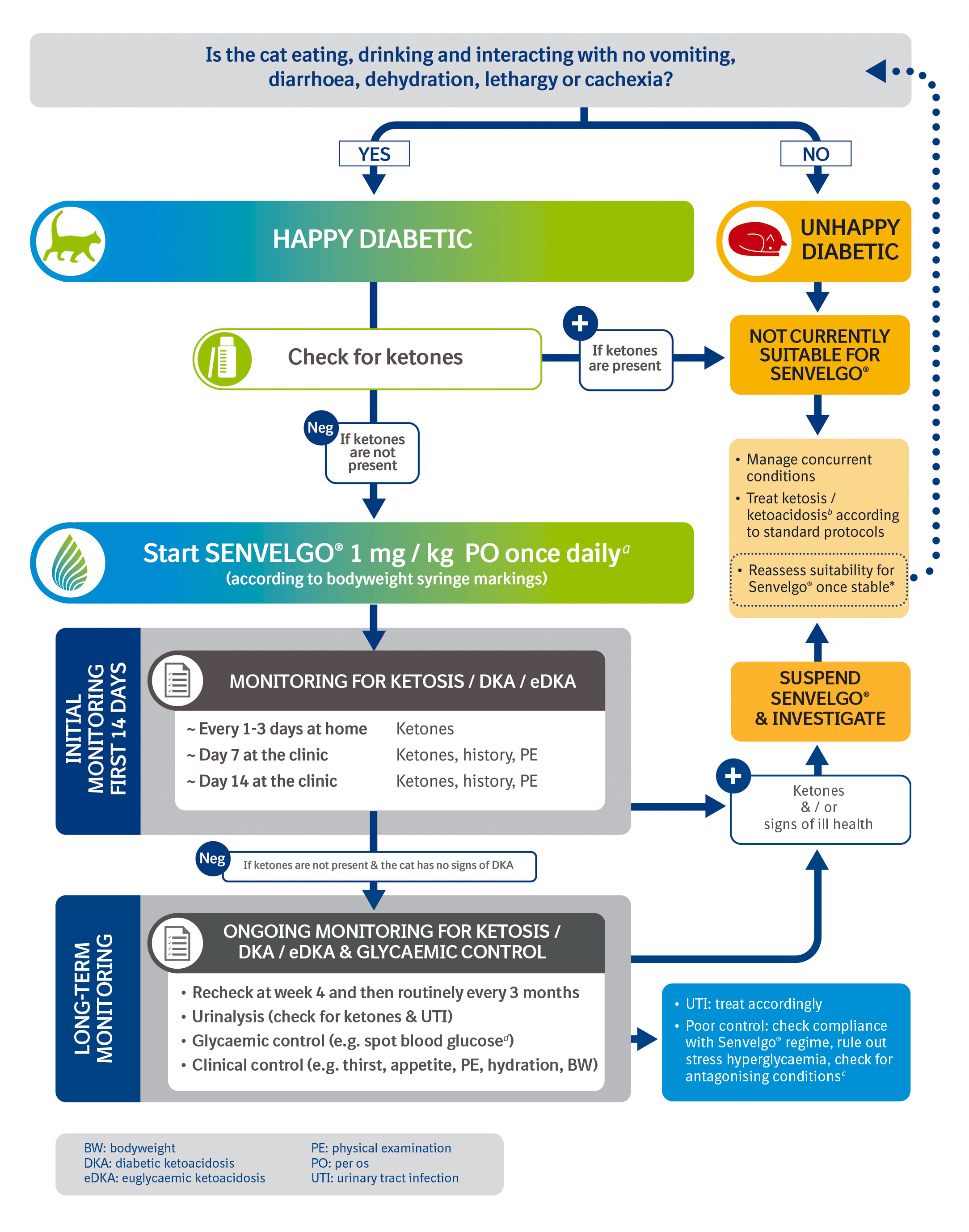
a. Cats previously treated with insulin may be at higher risk for DKA & should be monitored closely when starting treatment. If transitioning from insulin, omit the insulin evening dose the day before starting Senvelgo® treatment.
b. Soluble insulin & intravenous fluid therapy required to resolve ketoacidosis (supplement with glucose/dextrose if blood glucose <15 mmol/l).
c. A small proportion of cats may not respond adequately to Senvelgo® treatment due to true insulin deficiency, so long-term treatment with insulin may be required in these cases.
d. While often a spot blood glucose will confirm glycaemic control, cats on Senvelgo® can still be impacted by stress hyperglycaemia. If a spot blood glucose is high consider repeating or doing a fructosamine.
-
1. Niessen, S. J. M. et al. (2022) Once daily oral therapy for feline diabetes mellitus: evaluation of SGLT-2 inhibitor velagliflozin as stand-alone therapy compared to insulin injection therapy in diabetic cats. Journal of Veterinary Internal Medicine 36, 2512–2513.
-
2. Sparkes, A. H. et al. (2015) ISFM Consensus Guidelines on the Practical Management of Diabetes Mellitus in Cats. J Feline Med Surg 17, 235–50.
-
3. Waite, O. et al. (2025) Frequency, Risk Factors, and Mortality for Diabetes Mellitus in 1 225 130 Cats Under Primary Veterinary Care in the United Kingdom in 2019. JVIM 39:e70161.
-
4. Rand J, Gottlieb, SA. Feline diabetes mellitus. Textbook of Veterinary Internal Medicine, 8th edition. Ettinger SJ, Feldman EC and Cote E, eds. Elsevier, Missouri. 2017;1781-1795.
-
5. 2018 Summary of the Veterinary Clinic: Pet Obesity Prevalence Survey & Pet Owner: Weight Management, Nutrition, and Pet Food Survey. Available at:
https://petobesityprevention.org/2018. -
6. Niessen, S. J. M. et al. (2017) The Big Pet Diabetes Survey: Perceived Frequency and Triggers for Euthanasia. Vet Sci 4, 27.
-
7. Diabetes in Cats: Quantitative market research study. Proprietary presentation, July 19, 2021. Kynetec; St. Louis, MO, on behalf of Boehringer Ingelheim.
-
8. Niessen, S. J. M. et al. (2010) Evaluation of a quaility-of-life tool for cats with diabetes mellitus. J Vet Intern Med 24, 1098-105.
-
9. Best New Product of the Year, 2024/2025 UK Veterinary Marketing Association (VMA) Awards
-
10. Behrend, E. N. et al. (2024) Velagliflozin, a once-daily, liquid, oral SGLT2 inhibitor, is effective as a stand-alone therapy for feline diabetes mellitus: the SENSATION study. JAVMA 262, 1343-1353.
-
11. Niessen, S. J. M. et al. (2024) Efficacy and safety of once daily oral administration of sodium-glucose cotransporter-2 inhibitor velagliflozin compared with twice daily insulin injection in diabetic cats. J Vet Intern Med 38, 2099–2119.
-
12. VMD. Summary of Product Characteristics (SPC): Senvelgo® 15mg/ml oral solution for cats (velagliflozin). Veterinary Medicines Directorate, UK.
-
13. Reusch C, Chapter: 291 Feline Diabetes Mellitus, In: Ettinger J, Feldman E; editors. St Louis, Missouri, Saunders Elsevier; Textbook of veterinary internal medicine. 10th ed. 2010 p 1796-1816.